
Safe and private
Private by default — the journal stays on your device until you choose optional Premium encrypted sync. Therapist export is still something you start, when you feel ready.


Progress Without Numbers and Calories
Nourish is a personal space for people with eating disorders (EDs) and those who simply want to live in harmony with themselves, food, and their bodies.
The app helps users track emotions, keep a food diary, recognize difficult moments, fill out DBT diary cards, and practice self-care. Achievements and the Progress Garden help users see changes and appreciate every step toward recovery and a healthier relationship with food.
Nourish Premium unlocks the Recovery Plate, Eating Rhythm, Courage Steps Map, and Pleasant Moments. Additional features include a sleep diary, medication reminders, more practices and meditations, and an extra bonus: Cat and Noir themes.
Nourish has no calorie counting, gram tracking, ratings, or strict rules. What matters here is not numbers, but comfort, self-care, and a more harmonious relationship with food and one’s own body.
By default, all entries are stored on the device. Premium also offers encrypted synchronization, backups, and access to data across multiple devices. The app’s core features are available for free.
Start making your progress already today!


Private by default — the journal stays on your device until you choose optional Premium encrypted sync. Therapist export is still something you start, when you feel ready.
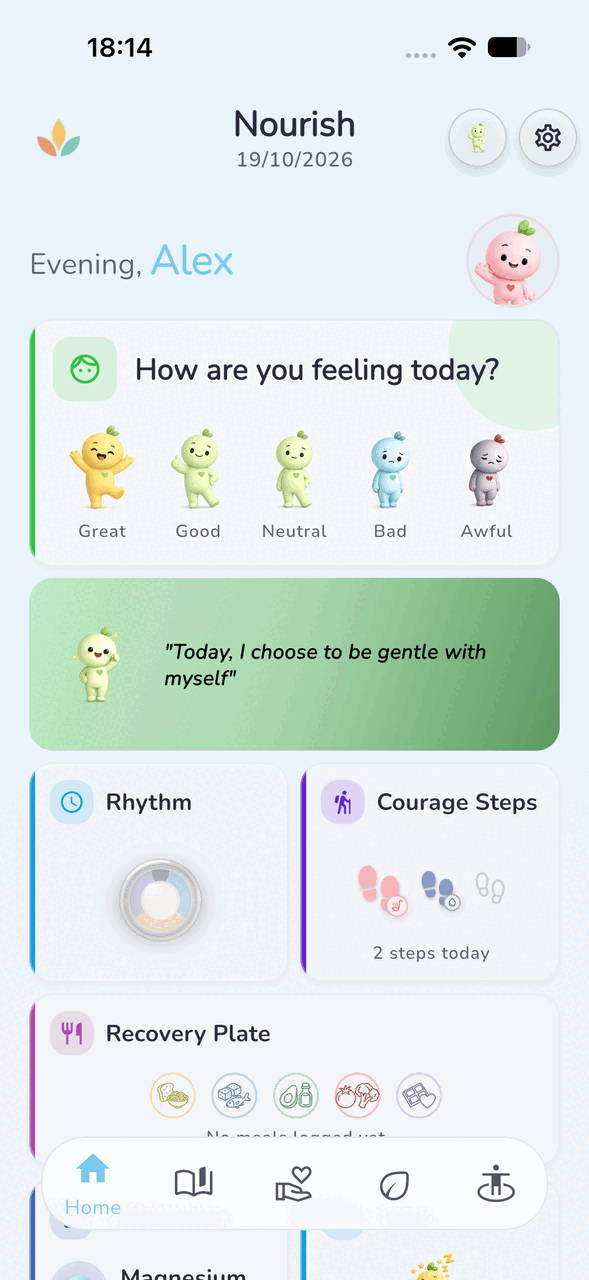
Journal emotions, meals, and difficult moments, then practice self-care. When you want them, Courage Map, Recovery Plate, Pleasant Moments, sleep check-ins, and medication reminders sit on the same calm home screen.
Journaling, DBT diary cards, difficult moments, core self-care, the achievement garden, and support materials stay free. Optional Nourish Premium adds Courage Map, Recovery Plate, Build Your Plate, Meal Rhythm, Pleasant Moments, extra self-care practices, recovery books, themes, and encrypted backup and sync.
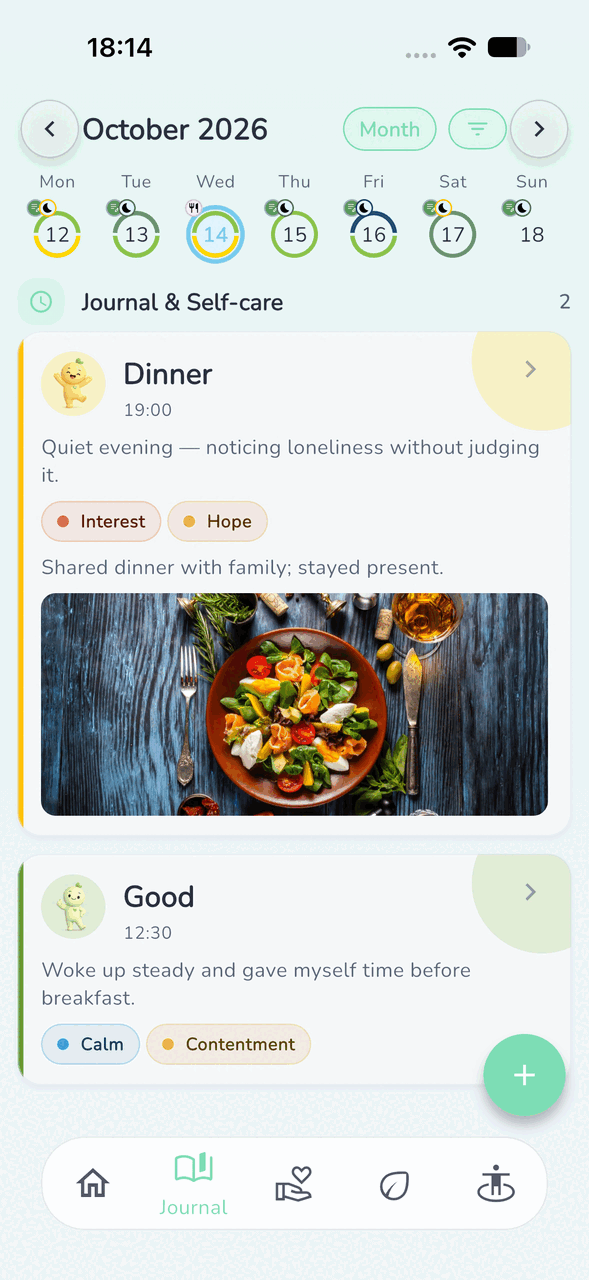
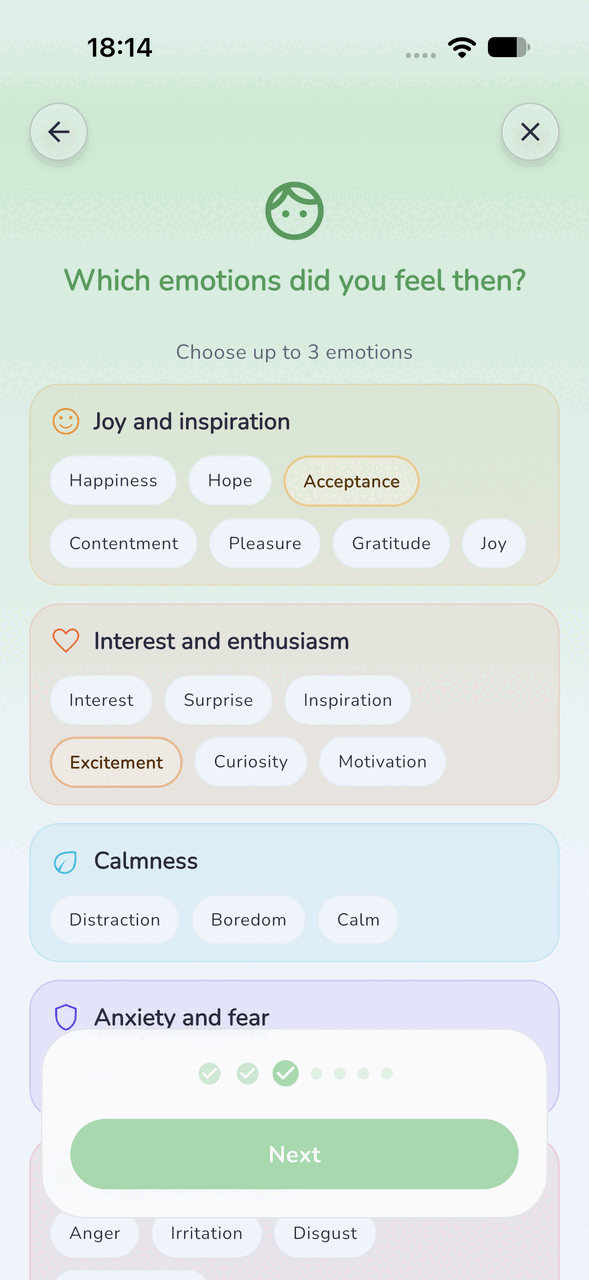
Log feelings, meals, hunger, water, activity, and food photos. The journal stays on this device unless you turn on sync. The calendar gathers:
Sleep check-ins and medication reminders can sit with the rest of the day. Patterns get easier to see, without calories, weight, or scores.

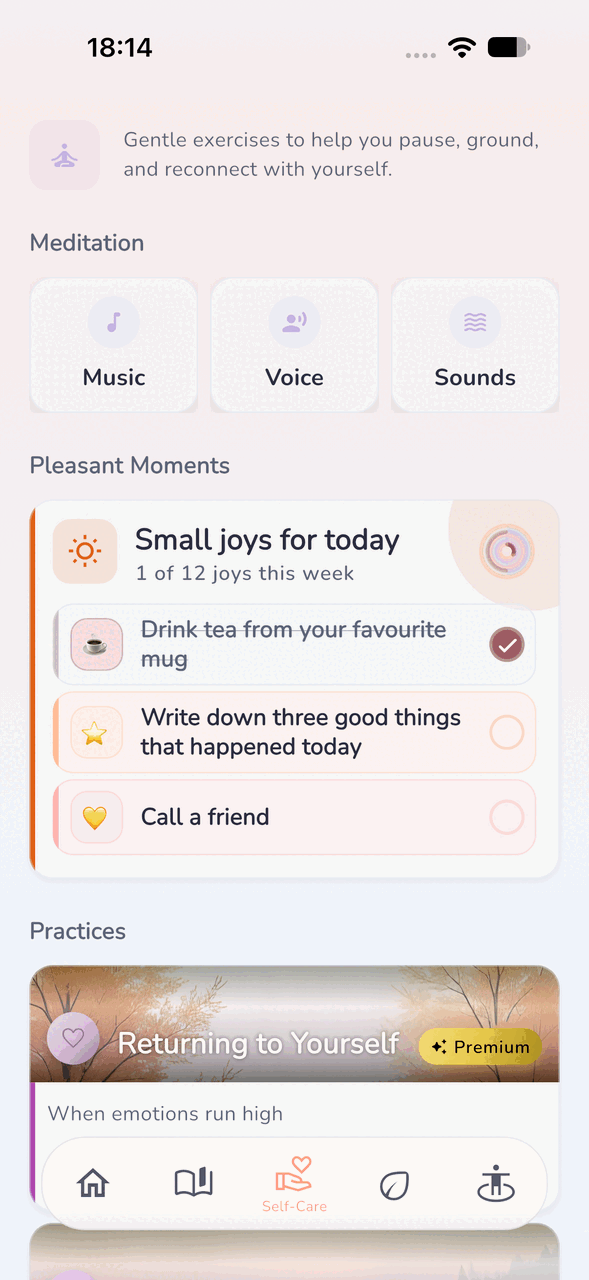
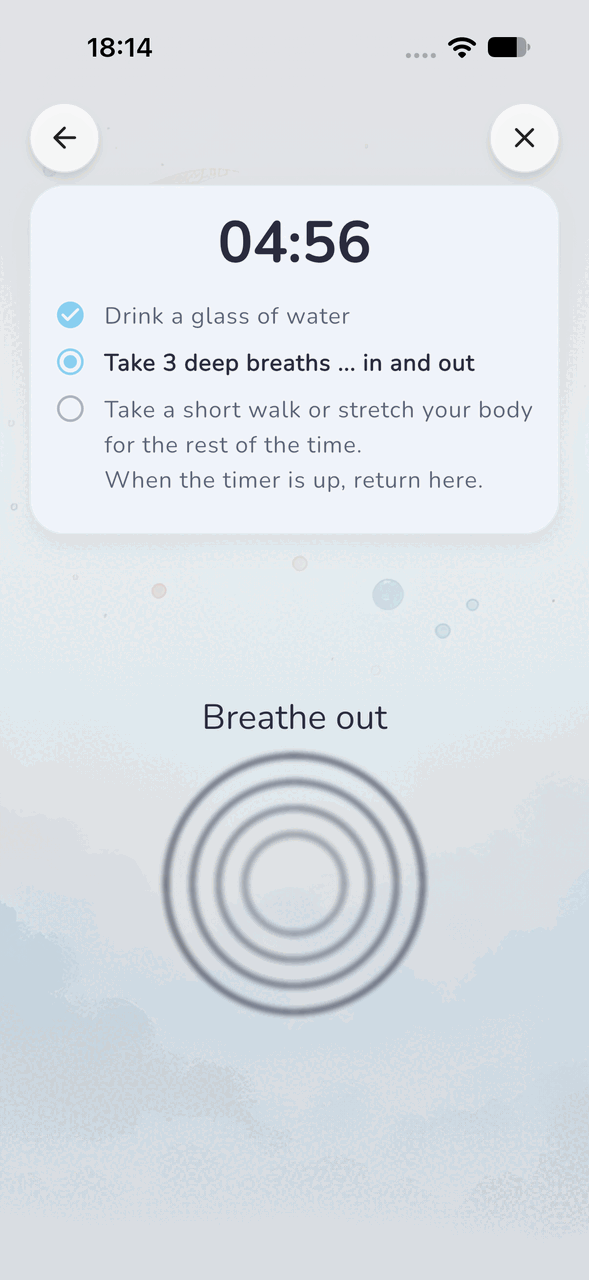
Gentle exercises help you pause, ground, and reconnect. Free practices include mindful eating, the 5-minute pause, the 5-4-3-2-1 grounding exercise, and meditation with music, voice, or sounds.
Pleasant Moments helps you plan small joys through the week and notice what feels good. Returning to Yourself and Circle of Support are optional Premium practices for harder moments.

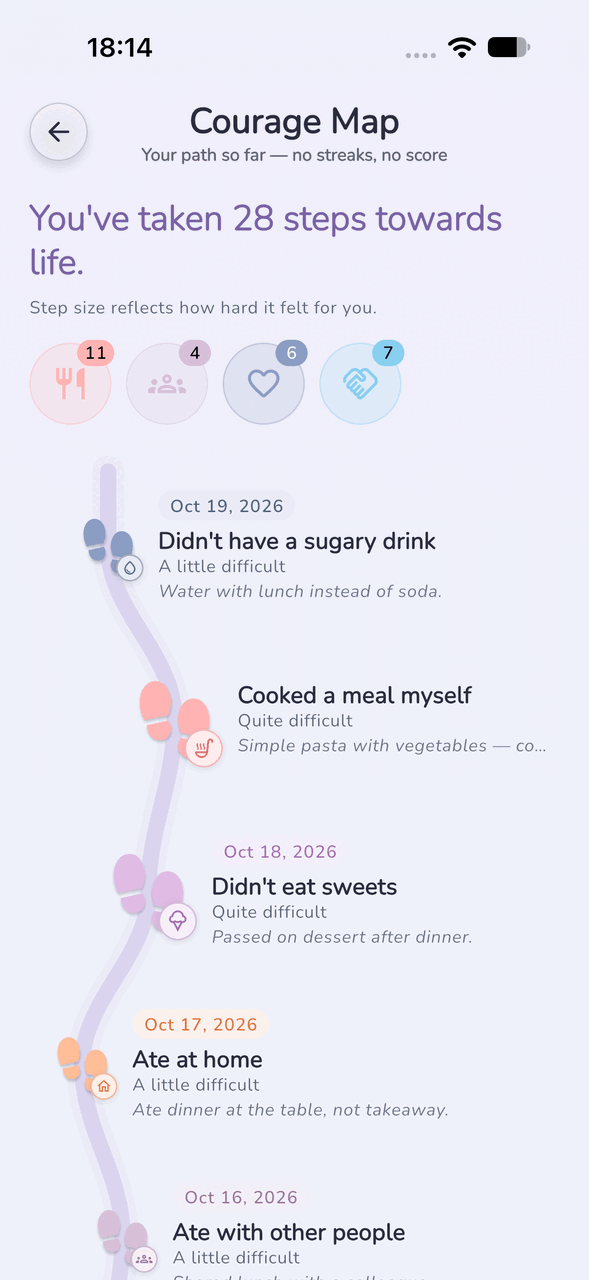
Brave acts — a fear food, asking for support, skipping a body check — become a visual path. Step size shows how hard it felt. Never a score, a streak, or a ranking.
Courage Map is part of optional Nourish Premium.

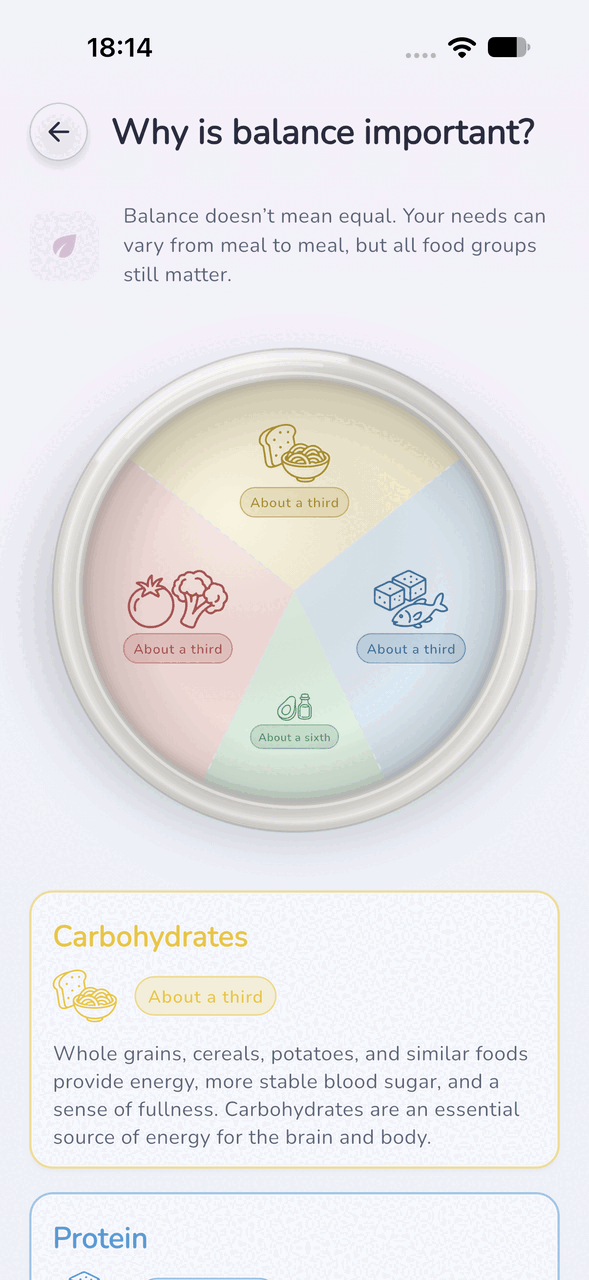
Balance does not mean equal portions. Recovery Plate, Build Your Plate, and Meal Rhythm support flexible, regular eating without calorie counting or a “perfect” meal.
These nourishment tools are part of optional Nourish Premium.

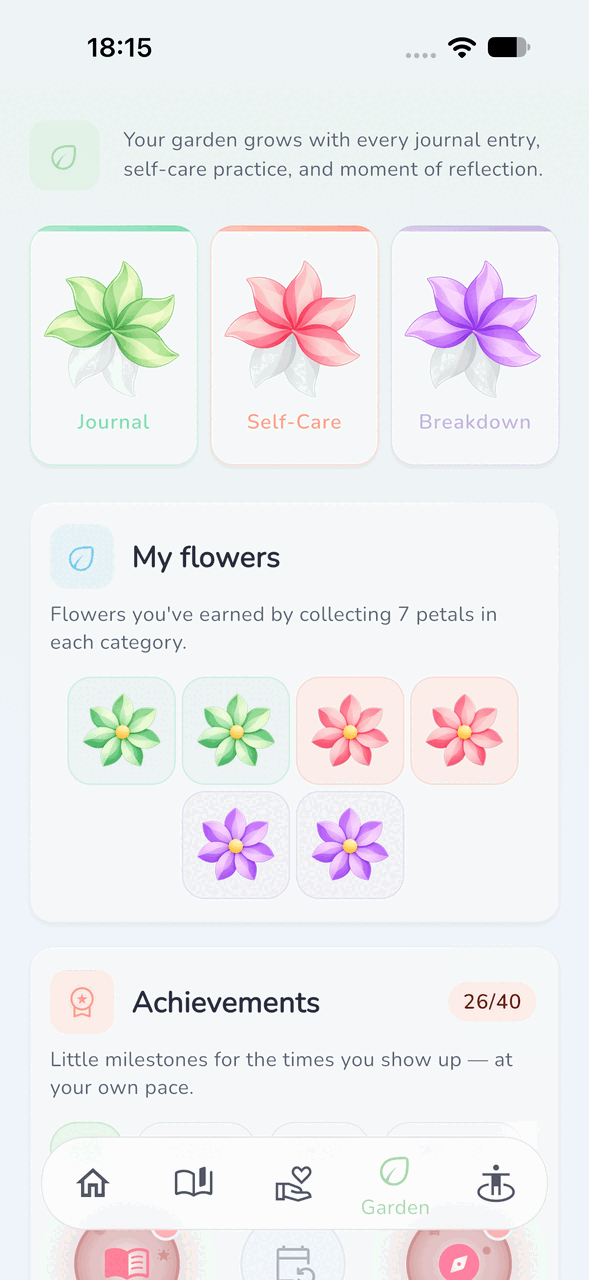
Your garden grows with every journal entry, self-care practice, and moment of reflection. Collect petals in each category and watch flowers bloom.
Achievements mark the times you show up — journaling, hydration, self-care weeks — at your own pace, without pressure or comparison.

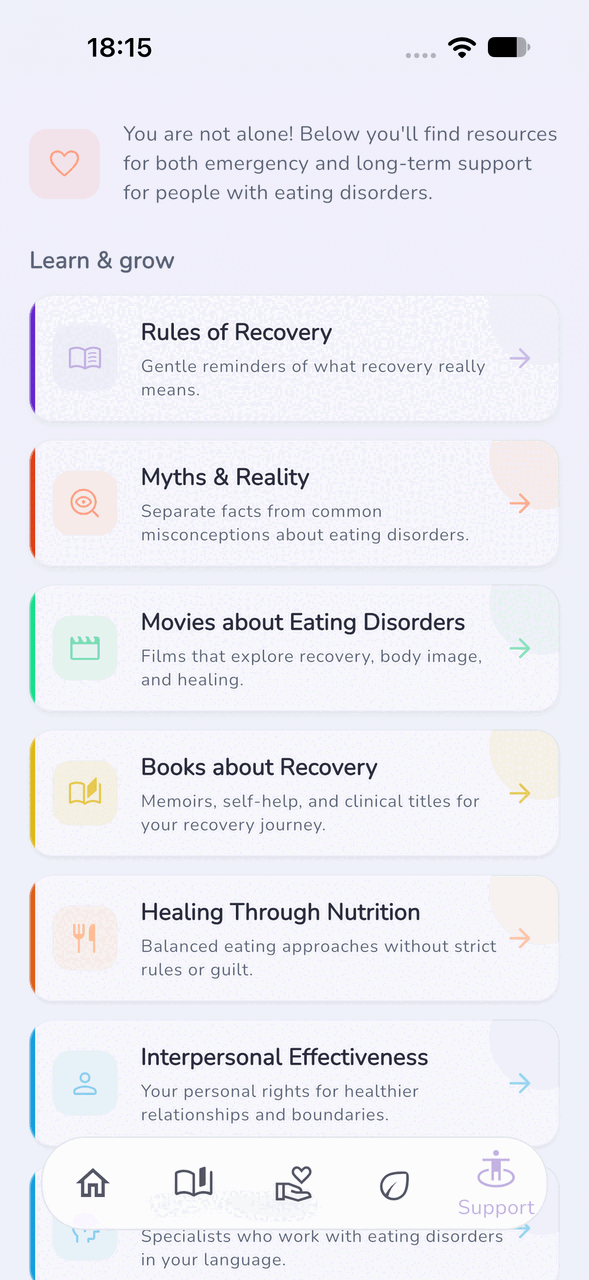
Recovery guidelines, myths and reality, films, healing through nutrition, and skills for relationships — plus a way to find specialists. When you choose, export your data for a therapist or send feedback to the people who build Nourish.
A recovery reading list is part of optional Premium. The rest of the support library stays free.

Home, journal, emotions, self-care, the 5-minute pause, Courage Map, Recovery Plate, your garden, and support — one calm, private place for recovery.
Answers about Nourish, privacy, and the app's role in recovery.
User stories about support, privacy, journaling, gentle structure, and sharing important entries with a therapist.
“"I've tried different recovery apps before, but many felt too complicated or too focused on calories. Nourish is much calmer. The app doesn't pressure me and helps me better understand my feelings and state."”
“"What makes Nourish unique is that you can share your data with your therapist anytime. It really helps during sessions—you can show your entries, state, and difficult moments instead of trying to remember everything."”
“"The DBT skill diary cards are incredibly helpful, and I really like that I can fill them out directly in the app."”
“"It's important to me that my data stays on my phone and no one sees it without my permission. That makes the app feel safe and personal."”
“"I'm supporting a partner with an ED, and I appreciated that the app isn't only for people going through recovery themselves. It helped me understand how to support my loved one without pressure."”
“"I really love how the app looks. Everything is calm, simple, and not overwhelming. On difficult days, that truly matters."”
“"As a therapist, I appreciate that people can choose what to share. The DBT skill diary cards make it easier to see emotional reactions, track skill use, and discuss real situations during therapy."”
We're a team of two building Nourish for people in recovery. Voluntary support helps us keep improving the app.
How to support

